
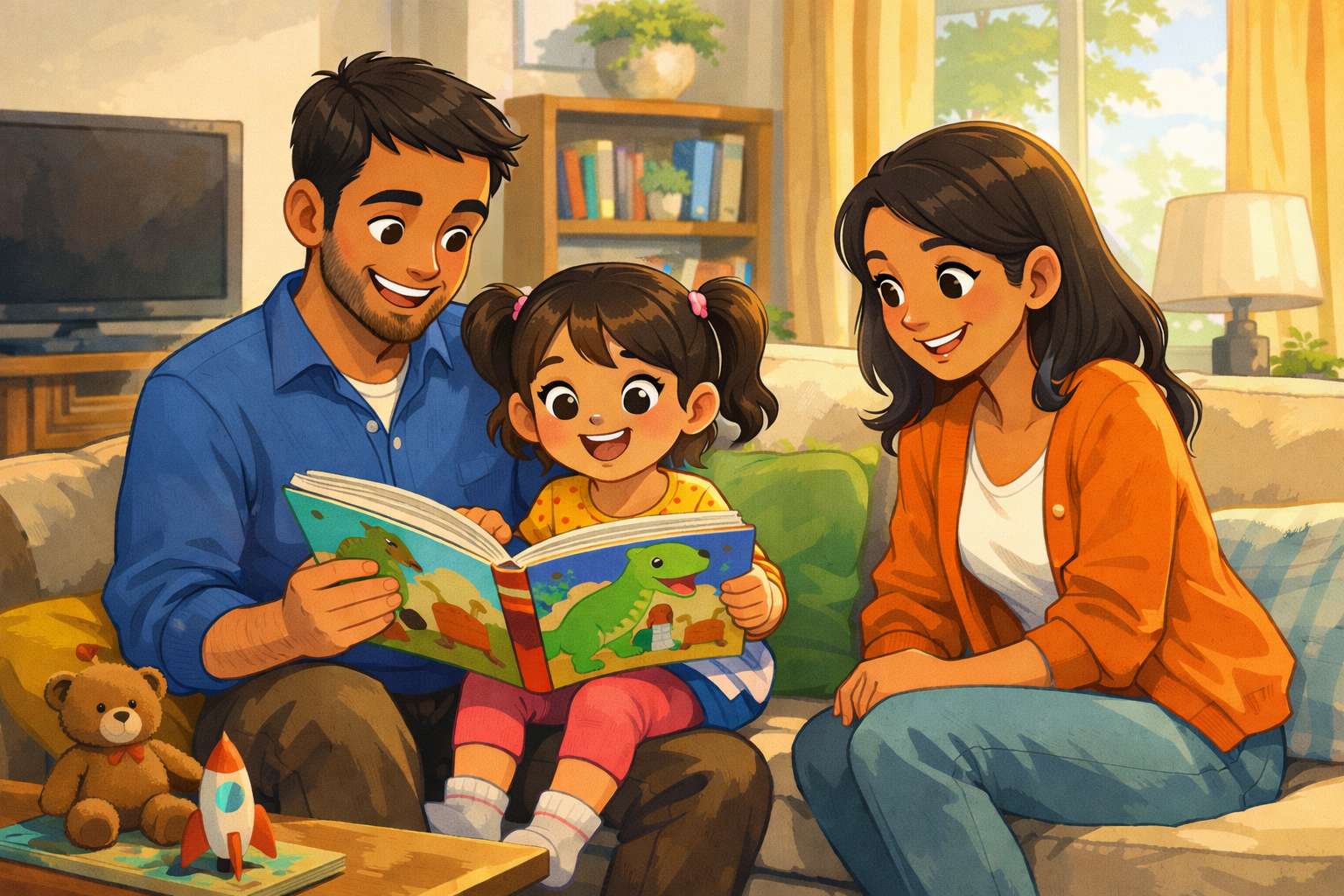
There was a time when turning on TV felt like the easiest way to keep my daughter engaged. Cocomelon, Pepa Pigs, and other YouTube channels became her go-to companions. Bright colors, quick sounds, instant gratification. It works. That’s exactly the problem.
Over the last 2 years, we made a quiet shift at home. Not a strict rulebook, not a dramatic “no screens ever” declaration. Just small, consistent changes. Today, my four-year-old cannot read yet, but she chooses books over screens more often than I expected.
This is not a guide built on theory. It’s what worked for us.
It Started With Picture Books, Not Rules
We didn’t begin by taking screens away. We started by introducing something more interesting.
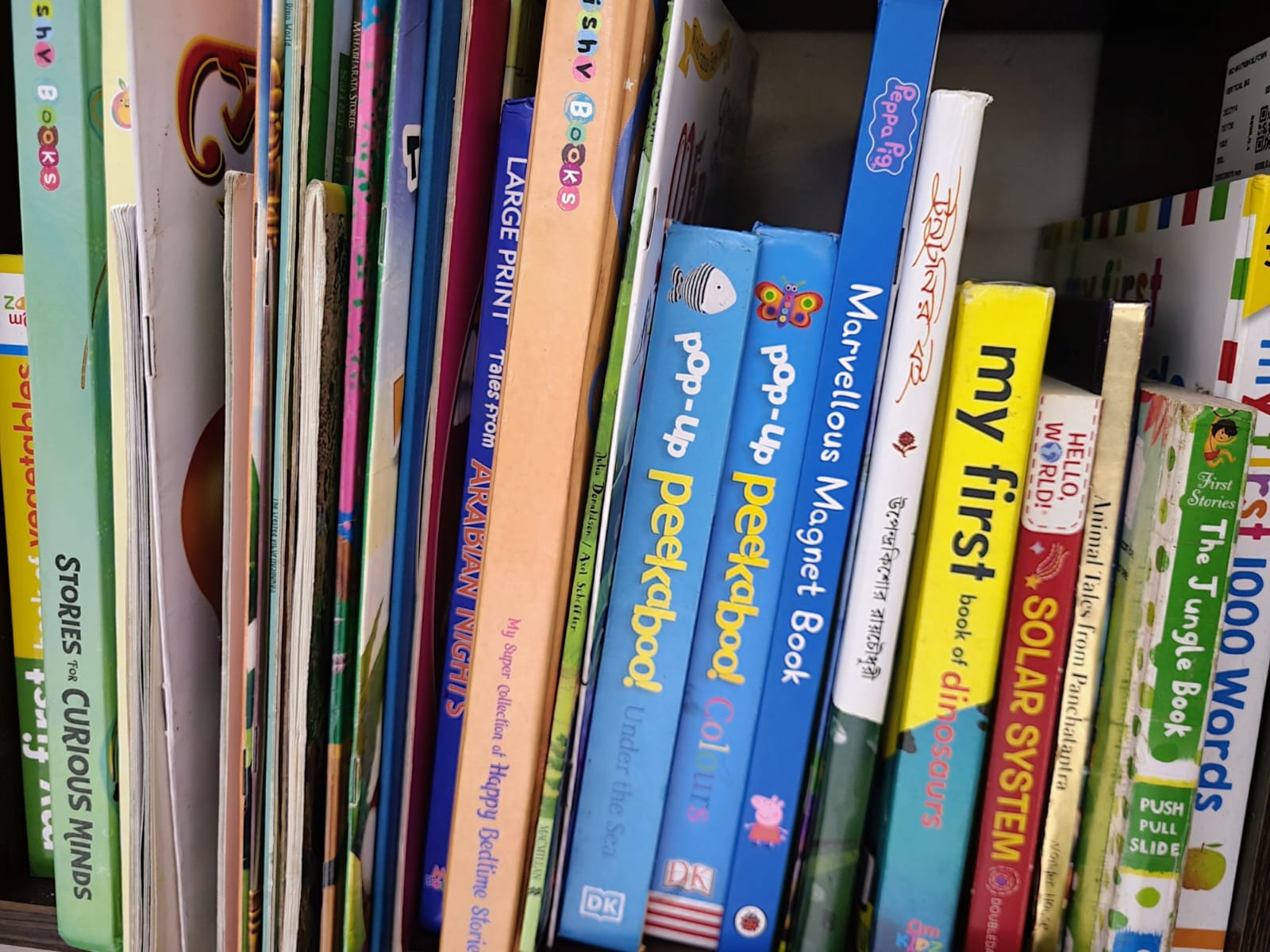
Colorful picture books. Big illustrations. Simple stories. Books that felt like toys.
At first, she didn’t “read.” or showed much interest. She flipped pages. Pointed at pictures. Asked questions. That was enough. Slowly, something changed.
She began picking up books on her own and bringing them to us:
“Can you tell me this story?”
That moment matters more than any rule you can enforce.
Follow Their Curiosity, Not a Curriculum
We noticed early that she was drawn to certain themes.
Dinosaurs. The solar system. Mermaids.
So we leaned into it.
We didn’t try to diversify too early or “balance” her reading. We simply bought more books around what she already loved.
That did two things:
- It made books feel relevant to her world
- It kept her coming back for more
Today, she casually talks about planets and dinosaurs in ways that surprise us for her age.
Not because we taught her. Because she explored it through books.
Reading Became a Shared Experience
At this age, reading is not a solo activity. It’s a relationship. We sit with her. We narrate stories. We exaggerate voices. We pause and ask questions.
Sometimes we don’t even follow the exact text. We build our own version of the story based on the pictures. That freedom matters. Books stopped being something “to read correctly” and became something to experience together.
We Changed Our Behavior First
This part is easy to overlook. We reduced our own phone usage in front of her. Not perfectly. But consciously.
She sees:
- I read books regularly
- I buy books often
- I talk about what I’m reading with my wife
No one instructed her to value books.
She observed it.
Children don’t follow instructions as much as they follow patterns.
What Research Says About Early Reading Habits
Our experience aligns closely with what child development research has been saying for years.
1. Language Development Improves Early
Studies show that children exposed to regular reading interactions develop stronger vocabulary and communication skills, even before they can read independently.
2. Attention Span Gets Stronger
Books require slower engagement compared to fast-paced digital content. Early reading exposure is linked to improved focus and sustained attention.
3. Imagination Expands Naturally
Books leave room for interpretation. This encourages children to visualize, imagine, and build their own narratives.
4. Emotional Understanding Deepens
Stories introduce characters, emotions, and situations that help children develop empathy and emotional awareness.
Making Reading a Habit (Without Forcing It)
If there’s one thing I’ve learned, it’s this: You cannot force a child to love books. But you can make it easy for them to fall in love with it.
Here’s what helped us:
Keep Books Accessible
Books are within her reach, not stored away.
Don’t Over-Structure It
No fixed “reading schedule pressure.” Just natural moments.
Repeat Stories Without Complaining
Yes, the same book again. And again. That repetition builds comfort.
Let Them Lead
If she wants dinosaurs every day, it’s dinosaurs every day.
Replace, Don’t Remove
Instead of saying “no phone,” we offer a book.
What Stayed With Me
The shift was not dramatic. It was gradual, almost invisible. But one day, I noticed this:
She had a choice between a screen and a book.
She picked the book. That’s when we knew something had worked.
Final Thoughts
We often worry about reducing screen time as if it’s a battle to win. It doesn’t have to be. You don’t need strict bans or complicated systems.
You just need to:
- Show the alternative
- Be part of the experience
- Model the habit
Children don’t just learn from what we tell them. They learn from what we live.
References
My wife and me used to do a lot of research on child psycology and development. Here are some of our bookmarked resources that informed our parenting choices.
-
American Academy of Pediatrics (2014). Literacy Promotion: An Essential Component of Primary Care Pediatric Practice. Pediatrics. Read source
-
Bus, A. G., Van Ijzendoorn, M. H., & Pellegrini, A. D. (1995). Joint book reading makes for success in learning to read: A meta-analysis on intergenerational transmission of literacy. Review of Educational Research. Read source
-
Mol, S. E., & Bus, A. G. (2011). To read or not to read: A meta-analysis of print exposure from infancy to early adulthood. Psychological Bulletin. Read source
-
Mar, R. A., Oatley, K., & Peterson, J. B. (2009). Exploring the link between reading fiction and empathy. Journal of Research in Personality. Read source
-
OECD (2010). PISA Results: Learning to Learn - Student Engagement, Strategies and Practices. Read source
Public comments
Prefer to leave a public note here? You can comment below using GitHub Discussions via Giscus.